Focus Intermarium
Structural geopolitical analysis between the Baltic and the Black Sea
2026

Potash and more

Thesis

The March potash deal revealed that the Lukashenko regime negotiates with external players not through one-off concessions, but through a package logic. Yet potash is only one element of the portfolio. The question is which of the remaining assets truly exist, which are still being probed, and which so far live only in the realm of analytical conjecture.

I

From one-off concessions to an asset portfolio

The release of 250 prisoners on March 19 was accompanied by fresh sanctions relief from the United States, and on March 26 OFAC formalized it through Belarus General License 14, the repeal of Directive 1, and the delisting of several potash and financial entities (Reuters, AP).

After this, it became harder to treat the Belarusian case as a narrow episode revolving around fertilizers. A broader set of assets that Minsk could theoretically convert into a foreign-policy resource began to emerge around it.

Two new storylines prompted the expansion of the analytical frame. The first was a Wirtualna Polska report about possible deliveries of Venezuelan and/or Azerbaijani oil to Belarus brokered by American companies. The second was a hypothesis by Ihar Tyshkevich suggesting that the highly enriched uranium remaining in Belarus could be folded into a broader deal structure (YouTube).

This article is an attempt to inventory the possible negotiating assets. It is not only about commodities. Transit, controlled de-escalation, a diplomatic platform, managed gestures of normalization, and even the removal of legacy security issues from the agenda can all serve as foreign-policy goods. But each of these tracks needs to be verified separately: by the logic of interests, by institutional indicators, by barriers, and by the narrow political window before the U.S. Senate elections on November 3, 2026 (FEC).

Hypothesis
Oil
Single source — Wirtualna Polska, no second confirmation
Highly Enriched Uranium
~100 kg HEU since 2011, historical asset, no current negotiations
Probing
Nitrogen
Logical candidate, but Grodno Azot is under heavy sanctions
Diplomatic Platform
Board of Peace + Paris and Berlin visits, but EU split
Second Tier
Migration, buffer, transit hub — background assets
Formalizing
Active
Potash
Baseline module: GL-14, SDN delisting, Nezhinsky GOK
Prisoners
Serial module: December 2025 + March 2026, 500+ released
II

Potash: the active module and the starting point

The potash storyline remains the only track that has crossed the line between hypothesis and established practice. The sanctions relief of March 2026 targeted not a random set of entities but an interconnected circuit: potash exports, banking settlements, and state financial infrastructure. Reuters listed Belinvestbank, Belaruskali, BPC, and Agrorozkwit in this package; several days later OFAC recorded the same structure in official documents (Reuters, OFAC).

This story also has a longer tail. AidData records a Chinese loan of $1.4 billion for the Nezhinsky GOK through China Development Bank. Argus Media reported that the project, with a capacity of up to 2 million tonnes per year, was due to come online in Q2 2026.

Nezhinsky GOK Under construction
Reserves ~1.3 bn tonnes of ore
Capacity up to 2 mt KCl/year
Investor China Development Bank
Location Lyuban district, Minsk Oblast

The Nezhinsky Mining and Processing Plant is Belarus's second potash project, designed to double the country's production capacity. Construction is based on the Nezhinsky section of the Starobin deposit with Chinese capital participation. A $1.4 billion loan was extended by China Development Bank in 2016; the government of Belarus served as guarantor, with insurance provided by Sinosure.

Potash in the current construct is therefore no longer simply an export commodity. For Washington, it is linked to the fertilizer market, the American agricultural lobby, and the tariff dispute with Canada. For Lithuania, it is tied to transit, arbitration, and the partial restoration of Klaipeda's economic function. For Minsk, it offers the ability to sell access to multiple nodes simultaneously: raw materials, settlements, and logistics. For this reason, potash remains the reference point for all other hypotheses.

ActivePotash
OFAC March 26: GL-14, repeal of Directive 1, removal of Belaruskali, BKK, Belinvestbank from SDN OFACReuters
Nezhinsky GOK: $1.4 bn CDB loan, capacity 2 mt/year, launch Q2 2026 AidDataArgus Media
Multi-stakeholder value: US farmers + Lithuanian transit + tariff lever vs Canada Good AuthorityLRTHillNotes
EU raising tariffs: 40–45 → 60 → 80 → 350 EUR/t by 2028
Chinese loan and legal title of Nezhinsky GOK remain unresolved
Lithuania has not formally lifted the transit ban
New OFAC licenses or carve-outs Coming months
Progress on Lithuanian transit via Klaipeda Q2–Q3 2026
Actual shipments under the expanded scheme Q2 2026
III

The nitrogen track: the next candidate, but with a heavy sanctions burden

If one looks for the most logical continuation of the March story, nitrogen comes first in line. The Iran crisis hit the nitrogen fertilizer group hardest. On March 26, AP directly linked the war with Iran to the halt of nitrogen fertilizer exports from the Persian Gulf and rising costs for American farmers (AP). In this context, the Belarusian nitrogen chemicals producer inevitably begins to look like a potential resource. Grodno Azot lists ammonia, urea, and liquid nitrogen fertilizers UAN among its main product lines.

But this is precisely where a hard line runs between logic and feasibility. In EU sanctions acts, the enterprise is identified as a major state-owned producer linked to Belneftekhim and to the crackdown on workers after 2020 (EUR-Lex). On top of this, there are investigations by the Belarusian Investigative Center and OCCRP into polyamide shipments and sanctions evasion, including for the benefit of Russian clients linked to the defense industry (BIC, OCCRP).

The nitrogen track makes sense in market and crisis terms, but politically it is far heavier than the potash track. The most realistic scenario is not a full removal of the enterprise from sanctions, but a very limited exception -- if Washington has any desire to push for one at all. Until then, nitrogen remains not the next nearly-ready step, but a candidate for the next step.

ProbingNitrogen
Iran crisis hit the nitrogen group: urea +30%, Hormuz −70% traffic NPRCarnegieIFPRI
Grodno Azot produces ammonia, urea, UAN — scarce commodities Grodno Azot
AP linked sanctions easing to Trump’s promise to help farmers AP/ABC
Grodno Azot under EU sanctions: ties to Belneftekhim, pressure on workers
BIC/OCCRP investigations: polyamide supplies circumventing sanctions for Russia’s defense industry
EU tariff barrier on Belarusian fertilizers is rising
Grodno Azot appearing in fertilizer security logic: license, carve-out H2 2026
Technical discussion of a limited exemption by the US Watch
IV

Oil: a strong leak, weak verification

The Wirtualna Polska report matters because it was the first to provide a sufficiently detailed description of a possible oil module in the deal. In the outlet's version, oil formally linked to Venezuela and/or Azerbaijan could flow to Belarus through American intermediaries and Baltic logistics.

The oil track could mean two completely different things. It could be an attempt at genuine diversification, if it truly involves physically replacing part of Russian supplies. But it could also turn out to be something else: a more elaborate political repackaging of the old dependency, where the documents, intermediaries, and routes change, but not the fundamental control structure.

The problem is that this entire track rests mainly on a single source. We found no confirmations of comparable caliber from Reuters, AP, or Bloomberg. Haqqin.az does not provide independent verification but merely expands on the storyline that had already appeared. Therefore, it is too early to include the oil module in the hard core of the new deal. Yet it can no longer be ignored: it is specific enough to warrant further monitoring.

HypothesisOil
WP: Venezuelan/Azerbaijani oil via US intermediaries and Baltic logistics Wirtualna Polska
Haqqin.az expands the narrative but provides no independent verification Haqqin.az
No confirmation from Reuters, AP, Bloomberg — single source
May be repackaging of Russian dependency rather than diversification
Complex logistics: swaps via Druzhba pipeline, sanctions constraints
A second independent source on oil supplies Watch
Tanker movements, port and intermediary involvement Watch
V

Highly enriched uranium: an old issue in a new context

Tyshkevich's hypothesis about HEU as part of a broader deal looks strongest not where he discusses the current negotiations, but where he resurfaces a long-standing problem. Belarus does indeed have an unresolved history with highly enriched uranium. NTI reports that by 2010 the country held an estimated 230 kg of HEU; 88.7 kg were removed in October-November 2010, and after the halt of cooperation in 2011 approximately 100 kg remained in Belarus.

Ihar Tyshkevich
Ihar Tyshkevich
Analyst at the Ukrainian Institute for the Future

Belarusian political analyst based in Kyiv. Previously collaborated with BISS and Belarus Security Blog, consulted for NDI. Published in NV.ua, Gordon, UDF. On March 20, 2026, he published an article on NV.ua titled "Belaruskali and the Kushners, partisan Jews. What is happening between Trump and Lukashenko."

A report by Siarhei Sikoryn for the IAEA confirms the removal of fuel from the IRT-M and the mobile reactor Pamir and describes the fuel as uranium enriched to 45% (IAEA / Sikorin). Bellona quoted Lukashenko himself speaking about the retained highly enriched uranium.

This is enough to acknowledge that Minsk possesses an asset which, under certain conditions, could sharply increase its value to the American side. For non-proliferation structures, closing such a dossier would be a far greater achievement than another fertilizer exchange.

But the transition from the historical base to the current deal has not been confirmed. In open sources for 2025-2026, there are no direct indicators that NNSA, DOE, or the IAEA are already conducting a new negotiating track with Minsk on the remaining HEU. There is a documented problem, a logically understandable American interest, and political value for Lukashenko. This is enough to consider the issue serious. But it is not yet enough to consider it an active module of the deal.

HypothesisHighly Enriched Uranium
NTI: ~230 kg HEU by 2010, 88.7 kg removed, ~100 kg remained after 2011 NTI
IAEA/Sikorin: uranium enriched up to 45% from IRT-M and Pamir reactors IAEA
Bellona: Lukashenko claimed retention of weapons-grade uranium Bellona
No signs of a current NNSA/DOE/IAEA negotiation track with Minsk
Requires far more sensitive coordination than economic tracks
Tyshkevich’s hypothesis not confirmed by 2025–2026 sources
Traces of technical diplomacy: NNSA, DOE, IAEA, specialized consultations Watch
Any mention of nuclear risk reduction in the Belarus context Watch
VI

Board of Peace: Belarus as a platform, but not as neutrality

Reuters reported that in January 2026 Lukashenko was invited to the Board of Peace; Russia was also among the invitees, and the format was presented as a diplomatic initiative of Trump (Reuters). Reuters also confirmed that Minsk planned to send Ryzhenkov instead and that the delegation was not granted visas (Reuters). BelTA relayed John Coale's words about a new invitation for Lukashenko to attend future sessions.

After February 24, 2022, Belarus no longer has a resource of neutrality that would allow Minsk to play the role of an external negotiating platform. Zelensky rejected talks in Belarus as early as February 27, 2022, precisely because the invasion was being launched from its territory (Reuters).

But it does not follow that the Belarusian negotiating function is needed by no one. For Moscow, such a platform is rather convenient. Lavrov said already in March 2022 that the main substantive diplomatic track on Ukraine was proceeding on Belarusian territory (Reuters).

Importantly, the probing is not coming only from Minsk. In early 2026, Paris and Berlin sent their own representatives to Belarus -- for the first time in years of near-total freeze of contacts. On February 5-6, Minsk was visited by Brice Roquefeuil, Director of the Continental Europe Department at the French Ministry of Foreign Affairs (BelTA). In March, Benjamin Walter, Desk Officer for Belarus at the German Federal Foreign Office, visited (REFORM.news).
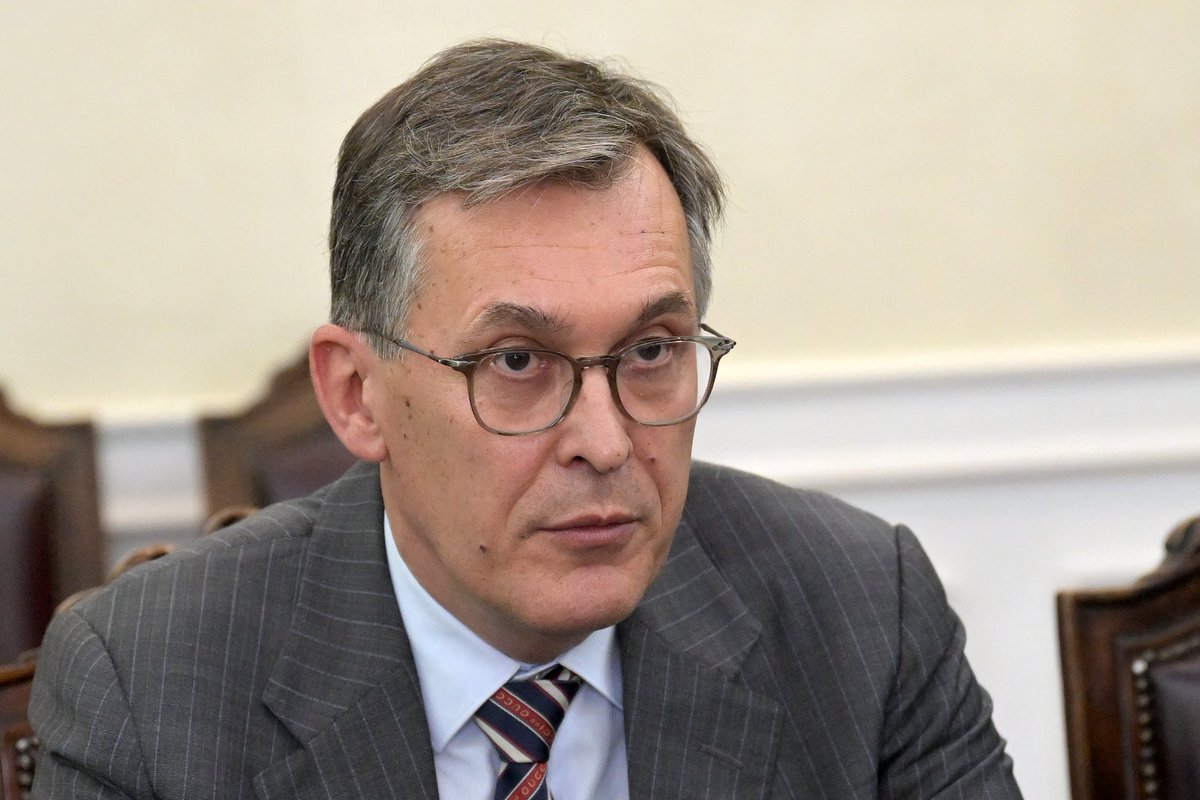
Brice Roquefeuil
Brice Roquefeuil
Director of Continental Europe Dept., French MFA

Senior career diplomat (conseiller des affaires étrangères hors classe). Served as political advisor at French embassies in Russia and Turkey, with diplomatic postings in Panama and Uzbekistan. Since November 2021 -- EU Ambassador for the Eastern Partnership and co-chair of the OSCE Minsk Group on Nagorno-Karabakh. Oversees Russia, Ukraine, and the post-Soviet space.

Benjamin Walter
Benjamin Walter
Desk Officer for Belarus, German Federal Foreign Office

Unusual background for a foreign ministry: PhD in theoretical and mathematical physics (Imperial College London), postdoc at SISSA (Trieste). Joined the German Federal Foreign Office in July 2024 -- initially as an attaché, and from October 2025 as Desk Officer for Belarus. Less than two years of MFA experience. A significantly lower rank than Roquefeuil: an operational officer, not a department head.

Warsaw has so far demonstratively refused to follow suit: Polish Deputy Foreign Minister Bartoszewski stated that a visit by a Polish diplomat was unlikely since Warsaw "does not maintain official relations with the Lukashenko government" (Zerkalo). The fault line within the EU is already visible.

The Board of Peace should be read not as proof of a future "new Geneva" in Minsk, but as a real track of partial diplomatic rehabilitation that could gain additional weight against the backdrop of a growing rift between American and European security logic.


ProbingDiplomatic Platform
Lukashenko invited to Board of Peace; Cole confirmed a repeat invitation ReutersBelTA
Roquefeuil (French MFA) and Walter (German MFA) visited Minsk in 2026 BelTAREFORM.news
Ambrazevich probed Europe as early as October 2025 Reuters
Legitimacy deficit: Ukraine rejects Minsk as a venue since February 2022
Poland refuses contacts — split within the EU
Visas for the Belarusian delegation to Washington were not issued
Confirmed Trump–Lukashenko phone call Coming months
Visa issuance, Lukashenko’s personal participation in Board of Peace H2 2026
New European visits to Minsk or high-level meetings Watch
VII

Prisoners: a module that has already become serial

The release of prisoners has a special status because Lukashenko controls this resource almost entirely and can deploy it relatively quickly. The December and March rounds have already demonstrated that this is not a one-off exchange but a repeatable logic. Reuters described both Coale's December trip to Minsk and the March exchange as elements of a single normalization process (Reuters, Reuters). Good Authority accurately described this construct as a barter, in which political prisoners are converted into an external exchange resource.

For Washington, this delivers a quick and morally marketable result. For the regime, it offers the ability to trade normalization steps without changing the nature of the system itself. For supporters of a free democratic Belarus, it entrenches a model in which repression begins to yield foreign-policy rent.

This is precisely why the prisoner track looks today like the most resilient short-term module: it is simple to execute, understandable to the external buyer, and has already proven its repeatability.

ActivePrisoners
December 2025: Cole’s visit, first round of releases Reuters
March 2026: 250 prisoners released in conjunction with sanctions easing ReutersAP
Good Authority: exchange logic — political prisoners as an external bargaining asset Good Authority
Regime logic: repression → rent. May expand the channel or raise the price
Entrenching a model in which repression yields foreign-policy rent
New waves of releases linked to US concessions Coming months
Changing terms of exchange (higher price per successive round) Watch
VIII

A narrow window until November: what can realistically take shape

If one looks not at an abstract year but at the period before the U.S. Senate elections on November 3, 2026, the picture narrows considerably (FEC). In such a window, the advantage goes to fast, intelligible, and media-friendly moves.

Two tracks remain in the top tier: prisoners and potash. The first is already functioning as a serial exchange module. The second has already been institutionalized through U.S. sanctions decisions.

Right behind them comes the Board of Peace -- specifically as a track of partial diplomatic rehabilitation. The nitrogen track looks like a logical extension of the potash story, but it is slowed down by the sanctions toxicity of Grodno Azot and the worsening European sanctions environment on fertilizers. The European Commission and the European Parliament have already confirmed a gradual increase in tariffs on fertilizers from Russia and Belarus (European Commission, European Parliament).

Oil and HEU in this window move into a monitoring zone. The oil track is still too weakly substantiated. The nuclear track relies too heavily on an unproven current negotiating channel.

Beyond the six main tracks, Minsk retains a set of secondary assets: reducing pressure on EU borders, a promise not to expand Belarus's involvement in the war, and value as a transit switch for flows between China, the EU, and the U.S. All of these storylines matter as background, but in the narrow window they look more like assets on the shelf.

Track portfolio: window until November 3, 2026
Hypothesis
Oil
Highly Enriched Uranium
Probing
Nitrogen
Diplomatic Platform
Second Tier
Formalizing
Active
Potash
Prisoners
What will show that momentum has started
Soon
Q2–Q3
H2 2026
Watch
Potash
New OFAC licenses or carve-outs
New OFAC licenses or carve-outs Coming months
Progress on Lithuanian transit via Klaipeda
Progress on Lithuanian transit via Klaipeda Q2–Q3 2026
Actual shipments under the expanded scheme
Actual shipments under the expanded scheme Q2 2026
Nitrogen
Grodno Azot appearing in fertilizer security logic: license, carve-out
Grodno Azot appearing in fertilizer security logic: license, carve-out H2 2026
Technical discussion of a limited exemption by the US
Technical discussion of a limited exemption by the US Watch
Oil
A second independent source on oil supplies
A second independent source on oil supplies Watch
Tanker movements, port and intermediary involvement
Tanker movements, port and intermediary involvement Watch
Highly Enriched Uranium
Traces of technical diplomacy: NNSA, DOE, IAEA, specialized consultations
Traces of technical diplomacy: NNSA, DOE, IAEA, specialized consultations Watch
Any mention of nuclear risk reduction in the Belarus context
Any mention of nuclear risk reduction in the Belarus context Watch
Diplomatic Platform
Confirmed Trump–Lukashenko phone call
Confirmed Trump–Lukashenko phone call Coming months
Visa issuance, Lukashenko’s personal participation in Board of Peace
Visa issuance, Lukashenko’s personal participation in Board of Peace H2 2026
New European visits to Minsk or high-level meetings
New European visits to Minsk or high-level meetings Watch
Prisoners
New waves of releases linked to US concessions
New waves of releases linked to US concessions Coming months
Changing terms of exchange (higher price per successive round)
Changing terms of exchange (higher price per successive round) Watch
IX

In lieu of a conclusion

In this logic, Belarus is bringing to the external market not a single commodity but an entire set of utilities: raw materials, transit, a platform, risk management, serial political concessions. This does not mean the regime has gained freedom of maneuver. Quite the opposite: dependency, vulnerability, and managed constraints have become what Lukashenko can convert into a foreign-policy resource.

Potash and prisoners are already embedded in this construct. Nitrogen and the Board of Peace look like the most probable candidates for expanding the scheme. Oil and highly enriched uranium remain important but far less substantiated storylines for now.

The question today is therefore not whether one grand deal exists around Belarus. What matters far more is this: how many different deals Minsk is trying to conduct simultaneously, and which of its assets it can actually bring to the exchange stage while the window of opportunity has not yet closed under the pressure of war, elections, sanctions, and the interests of more powerful players. And this is especially important for all supporters of a free democratic Belarus to understand.

Finding 1
Not one deal, but a portfolio
The question is not whether there is one big deal around Belarus. What matters more is how many different deals Minsk is trying to pursue simultaneously.
Finding 2
Two active modules
Potash and prisoners are already embedded in a working framework. These are the only tracks that have moved from hypothesis to practice.
Finding 3
Two candidates
Nitrogen and Board of Peace look like the most likely candidates for expanding the scheme, but each carries its own heavy constraints.
Finding 4
Two stories under watch
Oil and highly enriched uranium remain important but far less substantiated — it is too early to include them in the firm core.
Finding 5
The window is closing
The political window before the Senate elections on November 3, 2026 determines which tracks can realistically materialize in time.
Finding 6
Dependency as a resource
Dependency, vulnerability, and managed constraints are what Lukashenko converts into a foreign-policy resource.